About Alkebulan Journal

Alkebulan: A Journal of West and East African Studies is a shining example of intellectual rigor and cultural investigation. The University of Calabar’s Department of Philosophy in Nigeria publishes it twice a year. It’s more than just a place to save scholarly papers. The journal is a lively place for people from different fields to talk to each other and share their views.
Its goal is to explore the humanities and social sciences while also looking at the specific problems and chances that exist in West and East Africa. Alkebulan Journal has found its place in the worldwide academic world by using the most up-to-date theoretical and methodological techniques. It connects academic research with real-world uses.
The journal’s commitment to study across disciplines is seen from the wide range of topics it covers. These include philosophical questions about what it means to be African and sociological studies on how people come together to make change. It is a place where scholars, intellectuals, and practitioners who are interested in learning more about the intricacies of African communities can get together.
| Alkebulan Journal Overview | Details |
|---|---|
| Publication Frequency | Biannual (January-June, July-December) |
| Publisher | Department of Philosophy, University of Calabar, Nigeria |
| Focus Areas | Humanities, Social Sciences, Cross-Disciplinary Research |
| Regions Covered | West and East Africa |
| ISSN | Available on ISSN Portal |
| Website | alkebulanjournal.com |
Alkebulan Journal Summary and Information
Every six months (January to June and July to December)
Publisher: The University of Calabar’s Department of Philosophy in Nigeria
Focus Areas: Humanities, Social Sciences, and Research Across Disciplines Included West and East Africa
ISSN Available on ISSN Portal Website alkebulanjournal.com
This method not only adds to scholarly discussions, but it also gives useful information for making decisions about policies and improving society. In today’s divided academic world, the journal’s focus on research across disciplines is especially important. It fits with the Journal of Rare Ideas’ mission, which is to support research that crosses disciplines.
Both periodicals are dedicated to questioning established norms and revealing revolutionary concepts. The Alkebulan Journal’s main goal is to promote African points of view in academic debates around the world. This is in line with the larger drive to decolonize academia, which aims to get rid of Eurocentric prejudices and promote indigenous knowledge systems.
The journal helps make the academic world more open and fair by giving African researchers a place to share their work. Its articles generally talk about important social concerns, like how to help young people grow up, get people to vote, and what imperialism means for Africa. These topics are important to a lot of people, from policymakers to activists at the grassroots level.
For example, a recent post about how to get people involved in grassroots community organizing in Nigeria has started conversations about how local communities may shape democratic processes. The journal’s commitment to being easy to read makes it even more powerful. By publishing in both print and digital versions, it makes sure that a wide range of people may read its material.
This is especially crucial in places where it is hard to get to academic resources. Also, working with researchers and organizations from other countries makes it more credible and gives it a wider reach. The magazine stands out in the larger field of African studies because of its unique way of doing research and publishing.
It talks about both the rich cultural and intellectual history of Africa and the problems that people face now. This dual focus makes it a useful tool for anyone who wants to learn more about how complicated African communities are. The publication has been successful because of its forward-thinking leaders and hardworking editorial staff.
Their hard work has turned the Alkebulan Journal into a place where people can think. It gets contributions from both well-known professors and up-and-coming researchers. This has brought together a lively group of people who are dedicated to pushing the limits of knowledge.
The growth of the Alkebulan Journal shows that more people are realizing how important African research is in the world of academics. As the globe deals with problems like climate change, social injustice, and technological disruption, the ideas of African scholars are more important than ever. Alkebulan and other journals like it are very important for making these points of view more visible.
To sum up, Alkebulan: A Journal of West and East African Studies is more than just a scholarly journal. It shows how important it is to have African voices in global debates and how powerful interdisciplinary research can be. It has made important contributions to the humanities and social sciences that are not only academically sound but also have a big effect on society. This makes it a key part of African study.
Who Renamed Alkebulan to Africa? The Truth Behind the Continent’s Identity
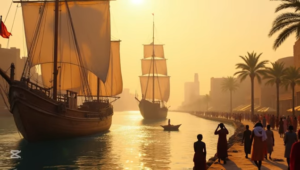
There is great historical and cultural significance to the term “Alkebulan,” which is sometimes cited as the original name of the African continent. Alkebulan, which has its roots in ancient languages, is claimed to mean “Mother of Mankind” or “Garden of Eden,” indicating that the continent is the bastion of human civilization. But the story of the migration from Alkebulan to Africa is one of colonization, power struggles, and the erasure of native identities.
The Romans are thought to have chosen the name “Africa” because they called the northern portion of the continent “Africa terra,” which translates as “land of the Afri.” A Berber tribe known as the Afri lived in areas of what is now Tunisia. Because European explorers and colonists placed their own nomenclature on the countries they saw, the phrase eventually came to refer to the entire continent.
| Alkebulan vs. Africa: Key Details | Information |
|---|---|
| Original Name | Alkebulan |
| Meaning of Alkebulan | “Mother of Mankind” or “Garden of Eden” |
| Renamed By | Romans (initially “Africa terra”) |
| Reason for Renaming | Roman and European colonization |
| Cultural Impact | Erasure of indigenous identity |
| Reference | ISSN Portal |
Alkebulan’s renaming to Africa is representative of a larger trend of cultural erasing that came with European colonization. In an attempt to establish dominance over the country and its inhabitants, colonists imposed new names, frequently ignoring the rich customs and histories that existed before their arrival. Similar patterns can be seen throughout the Americas, Asia, and Oceania, indicating that this technique was not exclusive to Africa.
The change from Alkebulan to Africa also illustrates how language can influence how people perceive things. Overshadowing its indigenous origins, the name “Africa” came to be associated with the continent’s colonial past. The world’s perception of Africa and Africans’ perceptions of themselves have been profoundly impacted by this linguistic shift.
Reclaiming indigenous names and identities has been more popular in recent years. This tendency is a component of a larger movement to question the narratives imposed by colonial powers and decolonize history. Proponents contend that bringing back old names, such as Alkebulan, can encourage pride in one’s background and help individuals rediscover their cultural roots.
The controversy over the name “Africa” also calls into question how historical memory shapes modern identities. Others perceive the word as a unifying term that reflects the common experiences and goals of the continent, while others see it as a symbol of colonial subjugation. The intricacy of Africa’s history and the difficulties in balancing its past and present are highlighted by this duality.
Alkebulan’s and Africa’s story is about the power dynamics that have created the continent’s history, not just a name. It serves as a reminder of how resilient African civilizations are and how crucial it is to preserve their legends for upcoming generations. We can better comprehend the forces that have shaped our world and the potential for a more inclusive future by going over this history again.
Another example of how education shapes historical narratives is the renaming of Alkebulan to Africa. The fact that many people are not familiar with the name “Alkebulan” is evidence of the shortcomings in popular history education. In order to promote a more complex understanding of Africa’s history and its contributions to world civilization, it is imperative that these gaps be filled.
In summary, the journey from Alkebulan to Africa is a tale of resiliency and cultural change. It captures the complexity of Africa’s past and the long-lasting effects of colonization on the continent’s identity. We can respect the continent’s rich legacy and help create a more inclusive view of its position in the world by investigating its past.
The Lost Legacy of Alkebulan: Africa’s Mighty Realms Before Europeans Rewrote History!
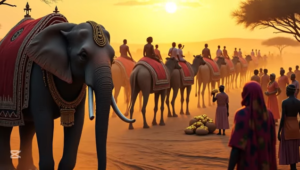
| Empire/Kingdom | Approximate Period | Key Features | Notable Ruler/Figure | Reference Link |
|---|---|---|---|---|
| Mali Empire | 1230–1600 CE | Gold trade dominance, Islamic scholarship centers like Timbuktu, decentralized provinces | Mansa Musa | Wikipedia – Mali Empire |
| Songhai Empire | 1460–1591 CE | Expansion via warfare, control of trans-Saharan routes, advanced bureaucracy | Askia Muhammad | Wikipedia – Songhai Empire |
| Great Zimbabwe | 1100–1450 CE | Massive dry-stone architecture, gold and ivory trade with Swahili coast | Sacral kings | Wikipedia – Great Zimbabwe |
| Kingdom of Kongo | 1390–1914 CE | Centralized monarchy, iron and textile production, matrilineal succession | Nzinga a Nkuwu | Wikipedia – Kingdom of Kongo |
| Benin Kingdom | 1180–1897 CE | Bronze casting artistry, fortified walls, trade in slaves and goods | Oba Ewuare | Wikipedia – Kingdom of Benin |
| Ethiopian Empire | 1137–1974 CE | Christian monarchy, resistance to invasions, Red Sea trade | Amda Seyon I | Wikipedia – Ethiopian Empire |
| Ghana Empire | 300–1100 CE | Gold-salt trade, horse-mounted warriors, serpent deity myths | Tenkamenin | Wikipedia – Ghana Empire |
| Kilwa Sultanate | 960–1513 CE | Indian Ocean trade hub, stone mosques, gold from Zimbabwe | Sulayman ibn al-Hasan | Wikipedia – Kilwa Sultanate |
| Ajuran Sultanate | 13th–17th century CE | Hydraulic engineering, maritime trade, resistance to Portuguese | Ajuran Gareen | Wikipedia – Ajuran Sultanate |
| Mapungubwe Kingdom | 1075–1220 CE | Gold artifacts, social stratification, trade with coast | Anonymous sacral kings | Wikipedia – Mapungubwe Kingdom |