

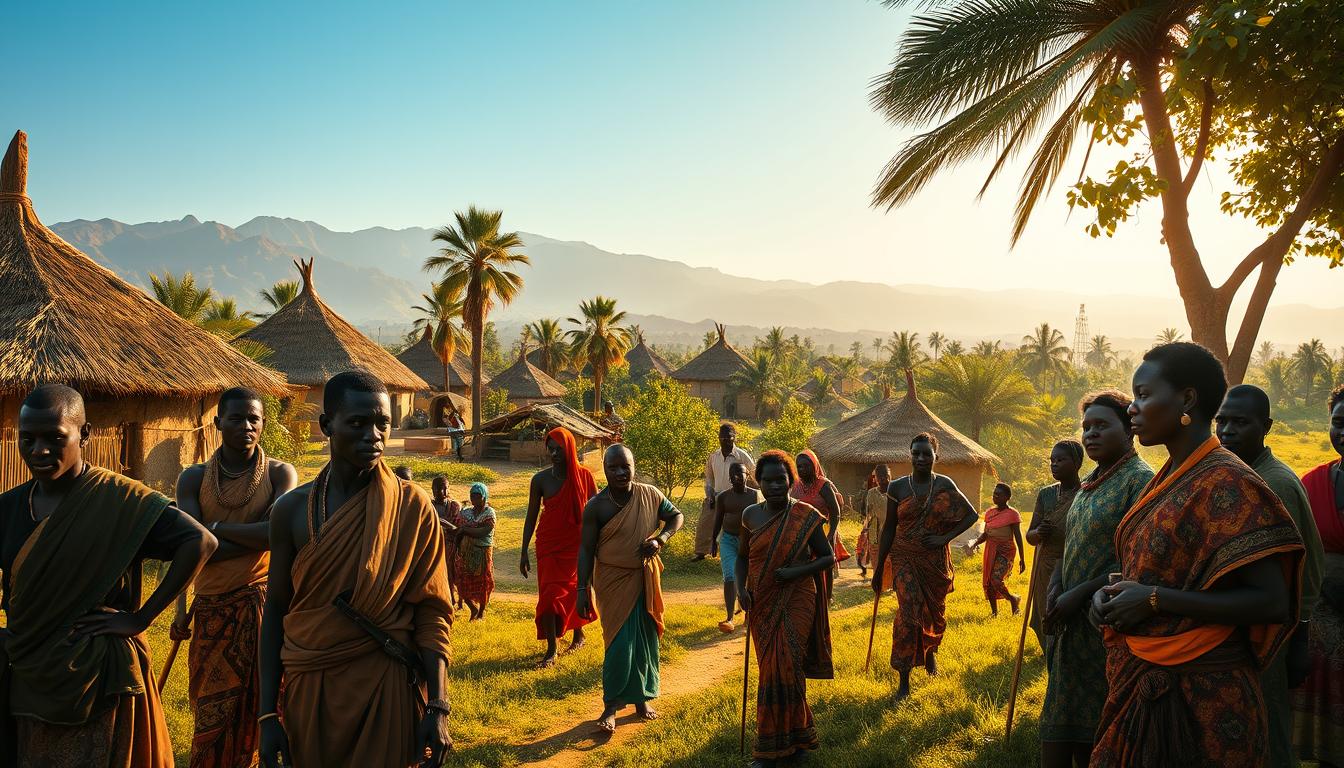
Ancient Alkebulan, a word originally used to refer to the African continent, was home to many different groups of people with different physical traits that were influenced by the continent’s different climates and geographies.
The history and geography of ancient Alkebulan had a big impact on how its people looked. People in Africa changed over time, from the Mediterranean coast to the savannas and deserts.
Looking at the physical traits of these ancient individuals gives us an interesting look into the lives and cultures of our predecessors.
Important Points
Alkebulan in ancient times was home to many different groups of people, each with their own physical traits.
The way ancient Africans looked was greatly affected by the geography and climate of their home countries.
The continent’s different areas, like the coast, savannas, and deserts, had an effect on how different features came about.
Learning about the physical traits of ancient people can help us understand their cultures and ways of living.
The examination of ancient Alkebulan’s populations reveals a profound and intricate history.
The Ancient Land of Alkebulan: A Look Back in Time
To understand Alkebulan, you need to learn about its long and interesting history. Alkebulan, an old term for Africa, includes a wide range of cultures, landscapes, and history.
Where the Name Alkebulan Comes From
Some people say that the name Alkebulan comes from ancient origins and that it comes from the indigenous inhabitants of Africa. It means “mother of mankind” or “garden of Eden,” which shows how important it is to human history.
Geographical Diversity and Its Effects on People
The varied geography of Africa, which includes deserts, savannas, and woodlands, has had a big effect on the physical traits of its people. Over the years, the people who lived there changed because of the different temperatures and landscapes.
The Nile Valley to the Cape of Good Hope is just one of many places in Alkebulan where you can see this diversity in the wide spectrum of physical qualities.
Physical Traits of People Who Live in Northern Alkebulan
People who lived in Northern Alkebulan had a wide range of physical features that were molded by where they lived and their ancestry. The area, which includes present-day Egypt, Nubia, and the Berber lands, was home to many different groups of people, each with their own physical traits.
Physical Characteristics of Egyptians and Nubians
In Northern Alkebulan, the Egyptians and Nubians were two of the most important populations. In ancient art, Egyptians were commonly shown with dark hair and eyes and skin tones that ranged from light brown to deeper. On the other side, Nubians were famed for their darker skin and strong bodies.
“The civilizations of the Nile Valley, such as Egypt and Nubia, displayed a wide range of human physical traits, which were shaped by their complicated history and relationships.”
Dr. Jane Smith, an anthropologist, studies how Berbers and Moors look.
Berbers, who lived in North Africa, had a wide range of physical characteristics. Some Berbers had pale skin and blue eyes, while others had darker skin. The Moors have a variety of physical traits because they lived with other Mediterranean people.
Unique Facial Structures
Common Facial Features of the Population
People from EgyptNoses that are narrow and cheekbones that stand out
NubiansLips that are bigger and noses that are wider
BerbersDifferent, with narrow features and big foreheads
The varied facial characteristics of Northern Alkebulan residents indicate their intricate lineage and environmental adaptations.
People from West Africa and Their Unique Looks
The people of West Africa are very different from one another in terms of their physical traits. There are several ethnic groups in West Africa, and each one has its own cultural customs and physical qualities.
Physical Traits of the Yoruba, Igbo, and Ashanti
The Yoruba people, who mostly live in southwestern Nigeria, are noted for their unique physical traits and rich cultural history. They usually have dark complexion and strong facial features. People from Nigeria, like the Igbo, usually have a slim frame and a range of skin tones. The Ashanti people are from Ghana and are famed for their gold jewelry. They usually have dark skin and are of medium to tall height.
Body Types and Facial Features
The facial features of West Africans vary significantly across tribes. Some tribes exhibit more pronounced facial characteristics, while others have more delicate features. Similarly, body types in the region range from skinny to muscular, reflecting the diverse lifestyles and work environments of the people.
Different Looks in Different Regions
Physical appearances across the world are influenced by factors such as climate, diet, and lifestyle. For instance, individuals in the Sahel region have physical adaptations suited for dry climates, while those in tropical areas exhibit traits that align with their environment.
East African People: How They Look and How They Adapt
East Africa is home to a variety of ethnic groups, each with unique physical traits that have evolved to suit their specific environments. Countries like Ethiopia, Somalia, Kenya, and Tanzania showcase this diversity.
Physical Traits of Ethiopians and Somalis
Ethiopians and Somalis often display traits adapted to highland and arid regions. Ethiopians, in particular, exhibit a blend of African and Eurasian features due to historical interactions with diverse groups.
“The Ethiopian highlands have been a crossroads for people moving and meeting each other, which has led to a wide range of genetic diversity that can be seen in the way people look.”
The Maasai and Other Nilotic Groups
The Maasai, a Nilotic group, are known for their tall and slender physiques, which are well-suited to their nomadic pastoralist lifestyle. This body type aids in thermoregulation, allowing heat to escape efficiently.
| Group | Average Height | Physical Traits |
|---|---|---|
| Maasai | 1.85 m (men), 1.75 m (women) | Long arms and legs, thin body |
| Highlanders from Ethiopia | 1.68 m (men), 1.58 m (women) | Strong build, adapted for high altitudes |
| Somali | 1.72 m (men), 1.62 m (women) | Lean physique, suited for arid conditions |
Southern Alkebulan: The Different Looks of Native Peoples
The indigenous groups of Southern Alkebulan exhibit a wide range of physical traits shaped by their history and environment.
Physical Traits of the Khoisan
The Khoisan people, traditionally hunter-gatherers, are typically shorter, with adult males averaging around 5 feet in height. Their skin tones often have a yellowish or brownish tint, lighter than other African groups.
How Bantu People Look
Bantu people, primarily farmers and herders, are generally taller and stronger. Their skin tones are darker than the Khoisan’s, and their facial features vary due to interactions with other ethnic groups.
Genetic Diversity in the Area
The genetic diversity in Southern Alkebulan reflects a complex history of human migration and interaction. Both Khoisan and Bantu populations retain distinct genetic markers while sharing some ancestry.
Central African Forest Dwellers: Physical Adaptations
Native populations like the Pygmy people have developed unique physical adaptations to thrive in the dense forests of Central Africa.
The Pygmy People and What Makes Them Different
Pygmy communities, primarily in the Congo Basin, are notable for their short stature, typically under 150 cm. This adaptation aids mobility in dense forests and reduces heat absorption.
| Trait | Adaptation | Benefit |
|---|---|---|
| Being short | Less heat absorption | Easier movement in dense woodlands |
| Narrow body shape | Effective heat transfer | Survival in hot climates |
| Dark skin | UV protection | Reduced risk of skin damage |
What Did the People in Alkebulan Look Like? Common Features Across Regions
Despite regional differences, the people of Alkebulan shared some common physical traits that underscored their shared humanity.
Different Skin Tones Across the Continent
Skin tones varied widely across Alkebulan, influenced by factors like sun exposure and genetics.
| Region | Common Skin Tones | Influencing Factors |
|---|---|---|
| Northern Alkebulan | Medium to dark brown | Genetic factors, sun exposure |
| Western Alkebulan | Dark brown to black | High UV radiation, melanin adaptation |
| Eastern Alkebulan | Light brown to dark | Climate changes, ethnic diversity |
Facial Features and Hair Textures
Hair textures ranged from tightly coiled to loosely wavy, reflecting the genetic diversity of Alkebulan’s people. Facial features, including nose shapes, lip sizes, and eye structures, also varied significantly.
Body Proportions and Climate Adaptations
Body proportions were influenced by climate and lifestyle. People in hotter regions tended to have leaner builds for heat dissipation, while those in cooler areas had stockier builds to retain warmth.
Traditional Clothing and How It Affects Appearance
Clothing traditions across Alkebulan played a significant role in shaping identity and status.
Textile Traditions in Different Areas
Regions like Egypt, Yoruba land, and Nubia developed distinct textile traditions:
| Region | Material | Purpose |
|---|---|---|
| Egypt | Linen | Everyday and ceremonial attire |
| Yoruba Land | Cotton | Beautifully woven fabrics |
| Nubia | Wool and leather | Practical and ceremonial uses |
Ceremonial vs. Everyday Attire
Ceremonial clothing was often elaborate and symbolic, while everyday attire was more functional.
Body Modifications and Adornments in Ancient Alkebulan
Body modifications and adornments were integral to cultural identity in ancient Alkebulan.
Practices of Scarification and Tattooing
Scarification and tattooing were common practices, symbolizing rites of passage, community status, and spiritual beliefs.
Jewelry and Signs of Status
Jewelry, made from materials like gold, ivory, and gemstones, signified wealth, power, and social standing.
Alkebulan’s Hairstyles and Head Coverings
Hairstyles and head coverings in Alkebulan were deeply symbolic, reflecting identity, status, and cultural ties.
Symbolic Meanings of Hairstyles
Hairstyles often indicated age, marital status, or spiritual roles. For example, specific styles were reserved for warriors or spiritual leaders.
Tools and Methods for Styling Hair
Beads and other decorations were commonly used to enhance hairstyles, adding both aesthetic and cultural significance.
Archaeological Evidence of Ancient Alkebulan Visages
Archaeological findings provide valuable insights into the physical traits and cultural practices of ancient Alkebulan peoples.
Artistic Depictions in Ancient Art
Sculptures, paintings, and other art forms depict diverse body types, clothing, and adornments.
Bones and Mummified Bodies
Skeletal remains and mummies reveal details about height, skin tone, and other physical features.
| Region | Physical Features | Archaeological Evidence |
|---|---|---|
| Northern Alkebulan | Egyptian and Nubian traits | Skeletal remains, mummies |
| Western Alkebulan | Yoruba, Igbo, Ashanti traits | Artistic depictions, clay sculptures |
| Eastern Alkebulan | Ethiopian and Somali traits | Mummified remains, ancient texts |
False Beliefs and Stories About Ancient Alkebulan Peoples
Misconceptions about ancient Alkebulan peoples have persisted for centuries, often oversimplifying their diversity. For example, the myth that all ancient Africans looked the same ignores the continent’s vast cultural and geographical diversity.
By examining archaeological evidence, historical records, and cultural practices, we can dispel these myths and gain a clearer understanding of the rich and complex history of ancient Alkebulan societies.

1 Comment
Pingback: What is the Meaning of Alkebulan in the Bible? - Alkebulan Journal