

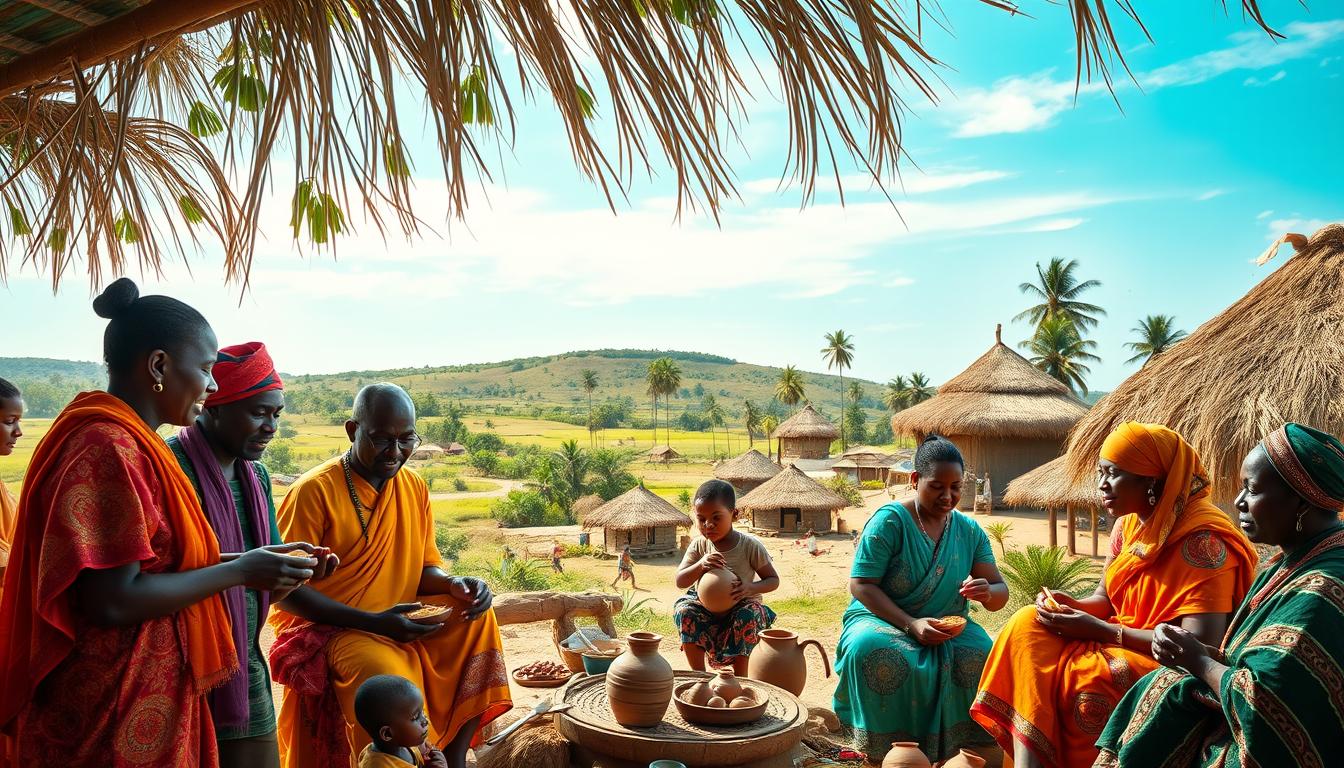
The rich cultural heritage of Alkebulan, a continent with a history as vast as its landscapes, is a fascinating topic that invites exploration. Before the era of colonization, the kingdoms of this ancient land were thriving with unique customs and traditions that defined their
These pre-colonization traditions were deeply rooted in the communities, influencing their social structures, spiritual practices, and communal activities. Understanding these customs provides a window into the lives of the people who lived in these kingdoms, showcasing their resilience, creativity, and connection to the land.
Key Takeaways
- Ancient Alkebulan kingdoms had distinct cultural practices.
- Pre-colonization traditions played a crucial role in shaping community life.
- The customs of these kingdoms reflected their deep connection to the land and their heritage.
- Exploring these traditions offers insights into the history and resilience of the people.
- The legacy of these customs continues to influence contemporary culture.
Social and Cultural Life in Ancient Alkebulan Kingdoms
The ancient Alkebulan kingdoms were known for their rich cultural heritage, which was reflected in their social and cultural practices. These practices not only shaped their daily lives but also played a significant role in defining their identities and community bonds.
Family Structures and Community Organization
Family structures in ancient Alkebulan kingdoms were typically organized around extended family ties, with a strong emphasis on kinship networks. Community organization was often centered around clan affiliations and age-grade systems.
Age-Grade Systems and Rites of Passage
Age-grade systems were an integral part of community organization, where individuals were grouped based on their age and underwent various rites of passage as they transitioned through different life stages.
Marriage Customs and Kinship Networks
Marriage customs in ancient Alkebulan kingdoms were often arranged to strengthen kinship ties and alliances between different families and clans. These customs played a crucial role in expanding social networks and reinforcing community bonds.
| Custom | Description | Significance |
|---|---|---|
| Age-Grade Systems | Grouping individuals by age | Community organization and socialization |
| Marriage Customs | Arranged marriages for kinship ties | Strengthening family alliances and social networks |
| Rites of Passage | Ceremonies marking life transitions | Initiation into new life stages and roles |
Education and Knowledge Transfer Systems
Education in ancient Alkebulan kingdoms was primarily through oral traditions and hands-on training. Knowledge was passed down from one generation to the next through storytelling, apprenticeships, and community rituals.
Oral Traditions and Storytelling
Oral traditions played a vital role in preserving history, cultural values, and social norms. Storytelling was a revered art form, used to educate and entertain community members.
Specialized Training in Crafts and Professions
Specialized training was provided in various crafts and professions, such as blacksmithing, weaving, and healing. This training was typically done through apprenticeships under the guidance of experienced practitioners.
What daily practices and customs did ancient Alkebulan kingdoms follow before colonization?
Daily life in ancient Alkebulan kingdoms was characterized by a blend of spiritual practices and economic activities. The people of these kingdoms lived in harmony with their environment and their cultural practices reflected this balance.
Religious and Spiritual Practices
Religion played a significant role in the daily lives of the people in ancient Alkebulan kingdoms. Their spiritual practices were diverse and multifaceted.
Ancestral Veneration and Divination
Ancestral veneration was a common practice, where ancestors were revered and believed to influence the living. Divination practices, such as reading signs and omens, were also used to guide decision-making.
Festivals and ceremonial calendars were integral to the spiritual life of these kingdoms. They were often tied to agricultural cycles and seasonal changes, celebrating the bounty of the land and the gods.
Agricultural and Economic Activities
The economy of ancient Alkebulan kingdoms was largely based on agriculture and trade. Their farming techniques were sophisticated and adapted to their local environments.
Farming Techniques and Food Production
Cropping systems, irrigation, and storage techniques were developed to maximize food production. Crops such as yams, maize, and sorghum were staples in many regions.
Trade Networks and Market Systems
Trade networks were extensive, connecting different regions and facilitating the exchange of goods, services, and ideas. Market systems were organized and efficient, with goods such as textiles, metals, and spices being traded.
The daily practices and customs of ancient Alkebulan kingdoms reflect a deep connection with their natural environment and a rich cultural heritage. Understanding these practices provides valuable insights into the history and traditions of these ancient societies.
Legacy and Enduring Traditions of Ancient Alkebulan
The rich cultural heritage of ancient Alkebulan continues to shape the identity of African communities today. Ancient Alkebulan customs, once thriving in their native context, have left an indelible mark on the continent’s cultural landscape.
These customs, deeply rooted in the social, spiritual, and economic practices of ancient kingdoms, remain a vital part of African cultural heritage. From traditional agricultural practices to spiritual rituals, the legacy of ancient Alkebulan is evident in the many customs that have been passed down through generations.
Understanding and preserving this cultural heritage is crucial for appreciating the history and diversity of African cultures. By exploring the customs and traditions of ancient Alkebulan, we can gain a deeper appreciation for the resilience and creativity of African communities.
The influence of ancient Alkebulan customs can still be seen in many aspects of modern African life, from cultural festivals to traditional crafts, serving as a testament to the enduring power of this rich cultural heritage.
